Designing it: $0
The 2D and 3D editors are free. You build the cap, place the artwork on a 1:1 model and look at it from every angle before any money moves.
The short answer, with the numbers in the open: designing the cap costs nothing, one physical sample is $60 and takes about 7 days, and production starts at 50 pieces per design and color at $10-15 per cap, about 14 days after you approve the sample. Payment is 50/50. Everything below explains what moves those numbers, so you can plan a first drop without asking anyone for a quote.
These are the baseline figures CBOs works from. They are public so a founder can build a launch budget on a Sunday night instead of waiting three days for a reply.
Going from an idea to 50 caps in hand costs roughly $560 to $810: one $60 sample plus a 50-piece run at $10-15 a cap. Labels, packaging and freight sit outside that and are quoted with the project.
The 2D and 3D editors are free. You build the cap, place the artwork on a 1:1 model and look at it from every angle before any money moves.
One real cap, usually about 7 days. Complex decoration, premium fabrics, metal pins, rhinestones or custom trims can move that number.
50 caps at $10-15 each. Where you land inside that range depends on the cap, not on how well you negotiate.
Half when the order is confirmed, half before it ships. There is no third invoice halfway through production.
Woven labels, hangtags, stickers, dust bags and rigid boxes are priced together with the caps, because they change the per-unit number.
Shipping is arranged after quality control and depends on weight, destination and how fast you need it. Import duties depend on your country.
The sequence matters more than the total. Everything before the sample is free, which is the point: the $60 goes on a cap you have already looked at from every angle. What to inspect when it lands on your desk is covered on sample to production.
Draw or upload the artwork, drop it on the 3D cap, pick fabric, panels, brim and closure. Most of the expensive mistakes are visible here.
Cap style, materials, decoration method, placements, labels and packaging decide the number. Send the design and the quantity you have in mind.
One cap, made the way the run will be made. This is where you check fit, crown, brim curve, thread color, stitch quality and label placement.
Changes are cheap now and expensive later. A second sample round is normal on a first cap with custom shape or new decoration.
From 50 pieces per design and color, with quality control before shipping. Payment is 50/50, half up front and half before it leaves.
CBOs is not a no-minimum service, and pretending otherwise would waste your time. The floor is 50 pieces per design and per color: two colorways of the same cap are two runs of 50, not one run of 100 split down the middle. Anyone selling custom caps with no minimum is decorating a blank that already exists — a real option, just a different product. The way to start smaller here is the sample: one cap, $60, in your hands before you commit to the fifty.
How a 50-piece run is plannedMost price gaps in custom headwear come from this one difference, not from margin. What a from-scratch cap includes is spelled out under private label hat manufacturing.
| Decorated blank | Cap made from scratch | |
|---|---|---|
| What you are buying | A stock cap somebody else designed, with your logo added to it | A cap built to your spec: panels, fabric, brim shape, closure, lining, labels |
| Who owns the cap | The blank brand. The body, the fit and usually the inside label are theirs | You. The shape, the trims and the packaging all carry your brand |
| Minimum | Often one piece, because the cap already exists in a warehouse | 1 sample at $60, then 50 pieces per design and color |
| Price per cap | Lower, because only the decoration is custom | $10-15 in bulk, because the cap itself is made from scratch |
| What you check first | A flat mockup laid over a catalog photo | A physical cap in your hands before you commit to the 50 |
Six things decide where a project lands inside the range, and five of them are choices you make for free in the 3D cap editor before anyone quotes anything.
The first lever, and the biggest. The same cap quoted at 50 and at 500 does not land on the same number, because setup is spread differently.
A structured 6-panel with a buckram front, a soft unstructured dad hat and a fitted cap are different amounts of work before decoration even starts.
Cotton twill, suede, corduroy, canvas, mesh and performance fabrics do not cost the same, and some need different sewing.
Flat embroidery is the baseline. 3D puff, chenille, woven and leather patches, metallic pins and rhinestones each add work per cap.
Front, side, back, brim and closure are separate jobs. A cap with one front logo and a cap with four hits are different products to make.
Woven inside label, size label, hangtag, custom closure, dust bag, rigid box. These are what make the cap feel like a brand, and they are part of the price.
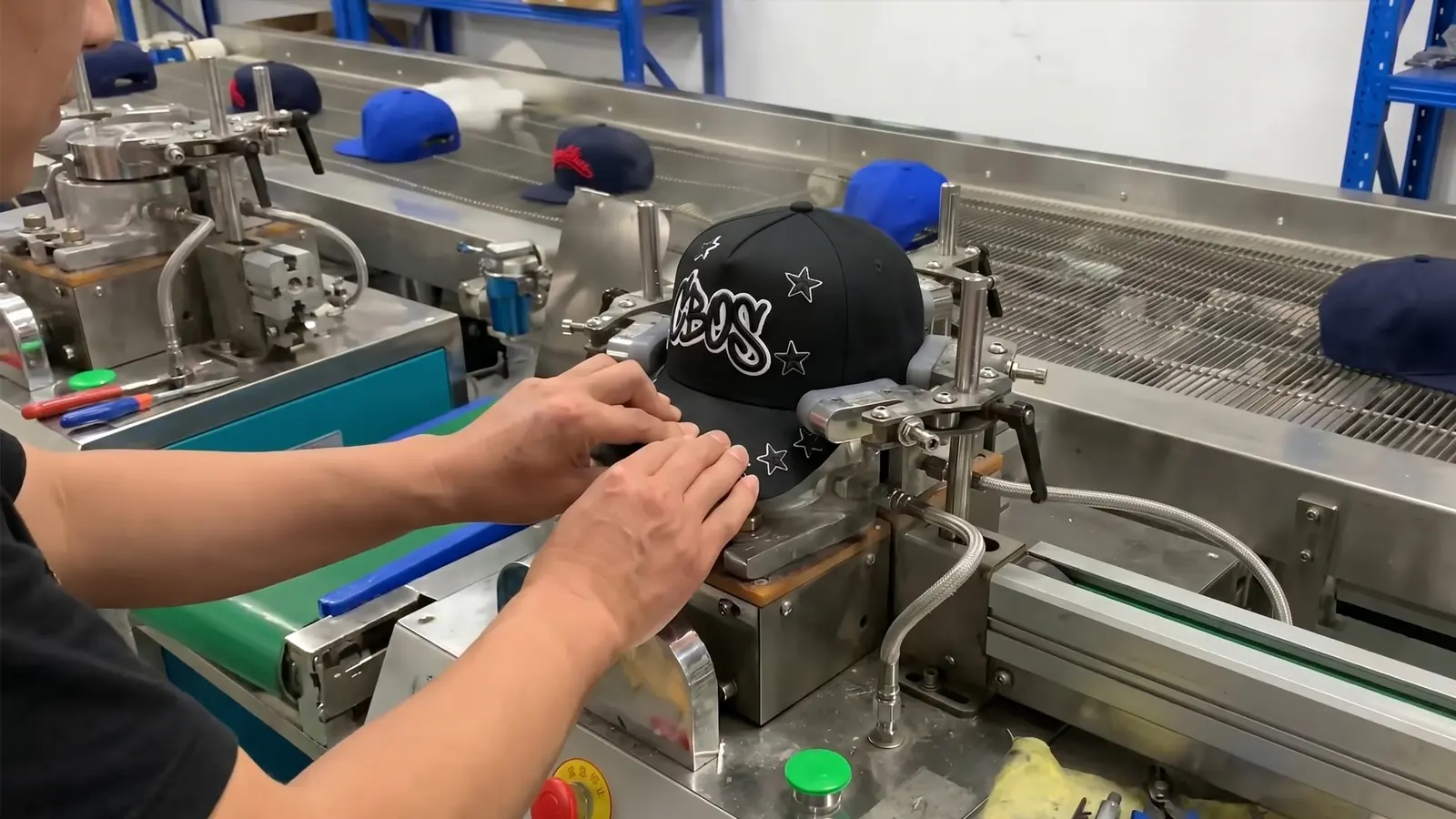
A CBOs cap on the machine during a production run. The $10-15 covers cutting, sewing, decoration and quality control on caps built for the brand that ordered them.
Three pages cover the rest: how the sample works, what production includes, and where to design the cap that gets quoted.
The $60 sample step in detail, and how one approved cap becomes a 50-piece run.
What cut-and-sew production covers: construction, decoration, labels, packaging, QC.
Build the cap first. It costs nothing and it is what the quote is based on.
Designing is free in CBOs. The first real cost is one physical sample at $60, usually about 7 days. After you approve it, production starts at 50 pieces per design and colorway at roughly $10-15 per cap, about 14 days, paid 50/50. So a first run of 50 caps typically lands around $500-750 plus the sample, before labels and packaging.
Price depends on quantity, cap structure, materials, decoration method, number of placements, trims, labels, packaging and shipping requirements.
One physical custom cap sample is $60 and usually takes about 7 days. It is a single cap, made the way the production run will be made, so you can check fit, crown shape, brim curve, fabric, embroidery quality and label placement before ordering 50. Complex decoration, premium fabrics, metal pins, rhinestones or custom trims can move the sample cost.
50 pieces per design and per color. Two colorways of the same cap are two runs of 50, not one run of 100 split in half. The single $60 sample is the way to get a real cap before you commit to the minimum.
No, and it is worth being clear about it. CBOs makes caps from scratch, so there is a real floor: 50 pieces per design and color. Suppliers advertising no minimum are almost always decorating a blank cap that already exists, which is a different product at a different price. What CBOs offers instead is one sample at $60, so the first thing you buy is one cap and not fifty.
At $10-15 per cap, 50 caps land around $500-750, plus the $60 sample you approve first. Labels, hangtags and packaging are quoted with the run because they change the per-unit number, and freight and any import duties sit outside the per-cap price.
Because they are not the same product. A decorated blank is a cap somebody else designed, cut and sewn, with your artwork added at the end. A custom cap is cut and sewn for you: panel structure, fabric, brim shape, closure, lining, inside labels and packaging are all yours. That is also why the minimum exists. If the comparison you care about is price per cap alone, a blank will always win it.
Payment is 50/50: half when the order is confirmed, half before the caps ship. The sample is paid separately when it is ordered on its own.
Sample development starts at $60 when ordered on its own. For approved bulk orders the sample cost may be included or credited depending on the project, so it is worth asking when the quote is prepared.
Production is handled in the United States and China. The location is matched to the project based on cap style, materials, decoration, quantity and timing rather than picked in advance.
Designing in 3D is immediate and free. The sample usually takes about 7 days, and bulk production about 14 days after you approve it. The part nobody can time for you is your own review between the two, which is also the part worth not rushing.
Yes. The 2D and 3D editors run in the browser, and on iPhone and iPad through the App Store app. You can build the cap, place artwork on a 1:1 3D model and generate renders without paying anything. The first cost is the physical sample.
Design the cap for free, order one sample, hold it, then decide whether the 50 is worth ordering. That order is the whole point of publishing these numbers.