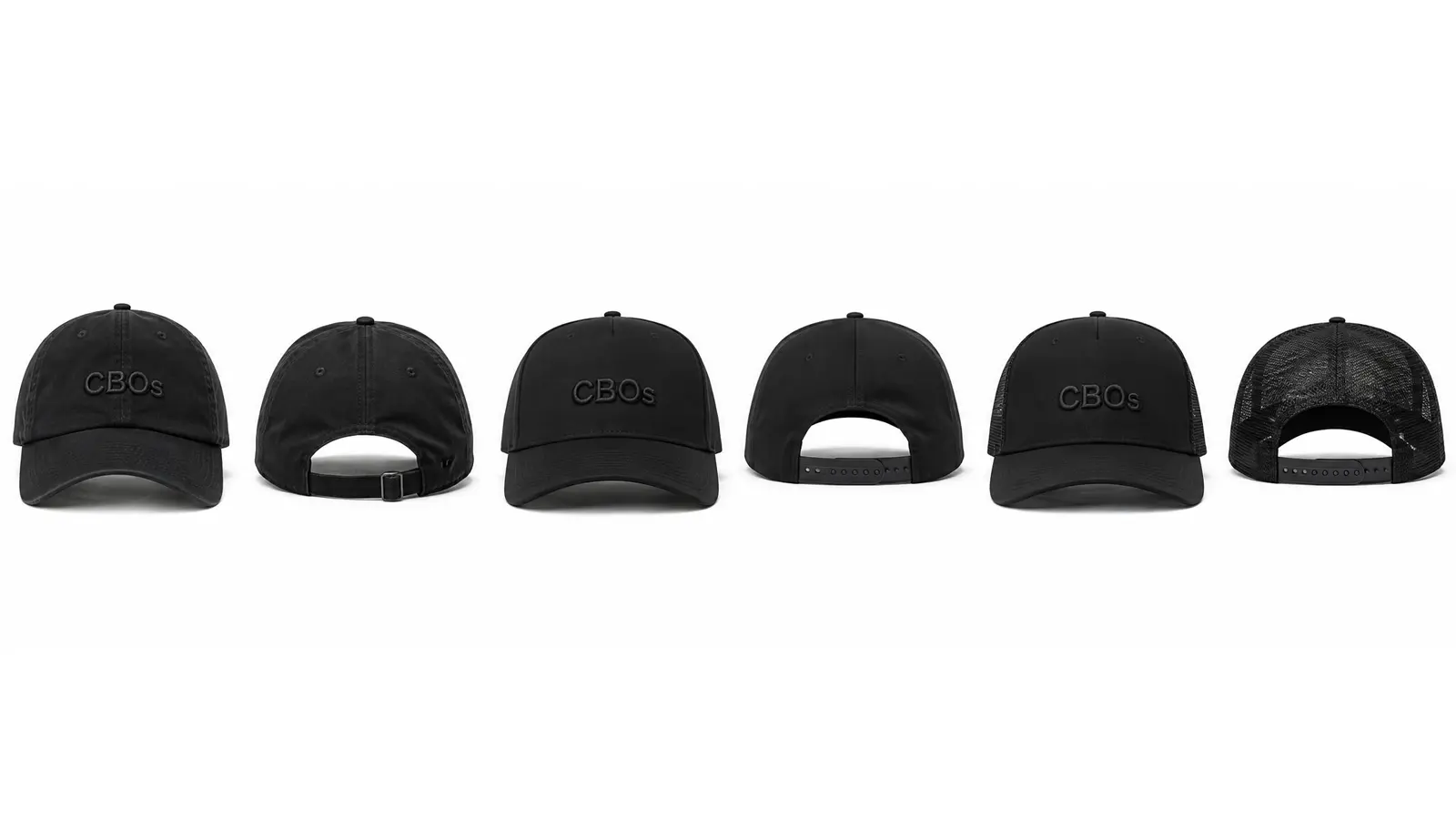
5-panel or 6-panel sounds like a small technical choice. It is not. It changes the front surface, the seam, the crown, the logo placement, the embroidery behavior and the whole feeling of the cap. Choose wrong and the design fights the hat. Choose right and suddenly everything looks intentional.
Key takeaways
- 5-panel hats offer a cleaner front canvas because they do not have a center seam.
- 6-panel hats feel more classic but require more care with center logo placement.
- Patches often work well on both styles, but direct embroidery behaves differently across seams.
- The best style depends on brand aesthetic, logo detail and intended decoration method.
Main difference between 5-panel and 6-panel hats
The main difference is the front. A 5-panel hat has one front panel. A 6-panel hat has a center seam running down the front. Simple. But that one seam changes a lot.
It affects styling, logo placement, embroidery behavior and what type of artwork feels natural. This is not a tiny factory spec. It is one of the biggest reasons a cap looks clean or awkward.
A 5-panel gives you a clean uninterrupted front surface, almost like a canvas. A 6-panel gives you the classic cap silhouette, with a defined center and often a taller front profile.
Crown, brim and fit
6-panel hats usually give more structure and more crown-height options: fitted caps, dad hats, A-frame truckers, snapbacks. 5-panel hats usually feel lower profile, softer, more minimal.
That changes how the cap looks on a head. A tall structured 6-panel sends a sportswear signal. A shallow 5-panel feels more outdoor, creative or skate-adjacent. Same logo, different world.
Logo placement and front seam impact
A 5-panel front gives artwork a clean uninterrupted surface. Patches, printed graphics and wide centered designs usually feel easier here because there is no seam question.
A 6-panel front can still look excellent, but you must respect the center seam. Thin vertical lines, tiny text and detailed artwork can get weird if they cross it. Either embrace the seam or keep the design away from it.
For a bold wordmark or simple icon, both can work. For a detailed illustration with fine lines, 5-panel is usually the safer call. Not always. Usually.
- 5-panel: wide front artwork, patches, printed graphics
- 6-panel: centered wordmarks, bold icons, classic sportswear logos
- Both: patches sized to stay within one panel or bridge the seam cleanly
Preview the cap before sampling
Build the idea in 2D, check scale in 3D and use the preview as a clearer sample reference before production.
Open the 3D hat designerEmbroidery and patch options
Patches work on both if the size matches the crown. A woven or leather patch can even cover the seam on a 6-panel, which is useful when you want the 6-panel shape without the visible seam drama.
Direct embroidery is more sensitive. Seams, panel stiffness and crown shape all matter. Flat embroidery usually crosses a 6-panel seam fine. 3D puff can get uneven if the artwork is not prepared carefully.
A 5-panel may be better for wide front artwork. A structured 6-panel may be better for classic sportswear logos and raised embroidery on a strong crown.
What works on each style
On a 5-panel, prioritize clean flat embroidery, woven patches and direct prints. The uninterrupted front rewards clarity.
On a 6-panel, prioritize centered wordmarks, 3D puff on bold letters and structured patches. Use the crown shape as part of the product signal.
Which style fits your brand
The style choice has to fit the brand world. 5-panel often feels skate, outdoor, creative or modern. 6-panel can feel classic, athletic, fitted or streetwear depending on shape and closure.
Neither is automatically better. The better one is the one that makes the brand feel believable in a product photo. A skate-adjacent brand with a rigid flat-brim 6-panel may feel off. A classic heritage brand with a soft 5-panel may feel off too.
If both structures feel possible, let the artwork decide. The cap that makes the logo look inevitable is usually the right one.
- Use 5-panel for clean front graphics and casual shapes
- Use 6-panel for classic cap language and structured crowns
- Use trucker shapes for bolder front presence
- Use dad hats for softer everyday styling
How to choose before sampling
Before sampling, choose the structure based on artwork, decoration method, fit preference and target customer. Do not choose only from a flat mockup. Flat mockups hide the exact thing you need to judge.
A quick 3D preview helps compare the same logo across silhouettes before spending money on samples. Most of the time, seeing both options in 3D solves the question in minutes.
Still unsure? Sample both at the same time. It costs more upfront, yes. But it can save a second sample round later, and the side-by-side comparison makes the final call much easier.
Testing in 3D before sampling
Load the artwork into a 3D cap preview. Switch between 5-panel and 6-panel. Check how the logo sits on the crown, against the seam, and on the flat panel. Same logo, completely different feeling sometimes.
Save the 3D preview inside the sample brief. It helps the factory understand the intended look, especially when the logo sits close to a seam.
FAQ: 5-panel vs 6-panel hats
Is a 5-panel hat better for logos?
A 5-panel hat is often easier for front logo placement because it has a seamless front panel. That makes it useful for patches, prints and detailed front graphics.
Why does a 6-panel hat have a seam in the middle?
A 6-panel hat is built from six fabric panels, creating a center seam at the front. That seam can affect embroidery and small details if the artwork crosses it.
Which hat style is better for streetwear?
Both can work. 5-panel hats often feel more modern or skate-inspired, while 6-panel snapbacks, truckers and fitted caps can feel more classic or sportswear-driven.
Conclusion
5-panel versus 6-panel is not about which one is better. That question is too lazy. The real question is which structure lets the logo, fabric and brand story line up without fighting each other.
Match the cap structure to the artwork and the customer. Preview both in 3D if you are unsure. Then let the first sample confirm the decision before bulk. The cap body is not a blank. It is part of the design.
Compare both in the 3D hat designer